



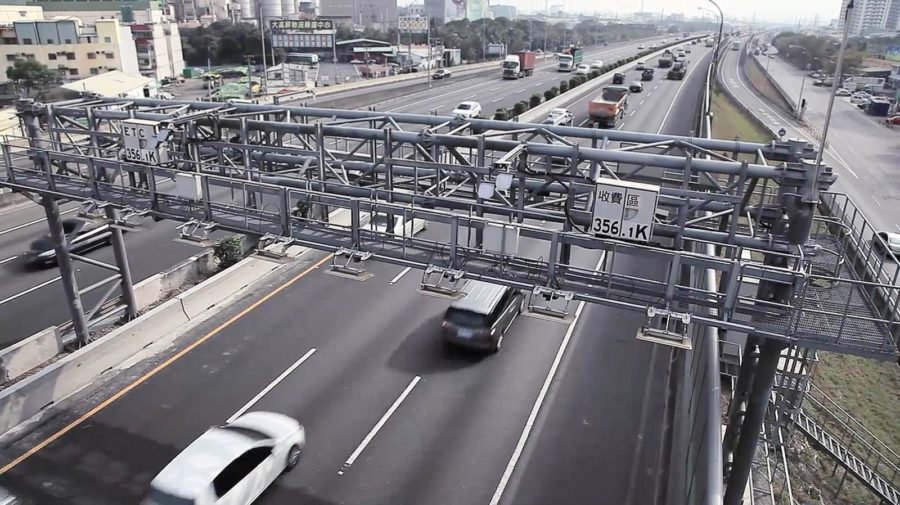
Tollgates on Japanese expressways are being replaced with those accepting only vehicles equipped with an electronic toll collection (ETC) system at an accelerated pace.
The number of interchanges that do not allow toll payments with credit cards and cash is increasing year after year, and expressway operators aim to complete the shift to ETC-only gates at almost all of the 1,500 toll stations across the country by around fiscal 2030.
The introduction of ETC-only lanes is designed to ease congestion and save on labor costs.
Under a road map announced in December 2020, the transport ministry plans to promote installations of ETC-only gates first in the Tokyo, Nagoya and Osaka metropolitan areas, aiming to complete the nationwide introduction by fiscal 2030, which ends in March 2031.
As of February this year, the combined ETC lane utilization rate stood at 95.8% among the country’s six expressway operators – East Nippon Expressway (Nexco East), Central Nippon Expressway (Nexco Central), West Nippon Expressway (Nexco West), Metropolitan Expressway, Hanshin Expressway and Honshu-Shikoku Bridge Expressway.
The shift to ETC-only gates on the Tokai-Kanjo Expressway, spanning about 130 kilometers, was completed in April, making it the first expressway in Japan where all toll gates accept only ETC-equipped vehicles.
While no major problems have been reported, some users said they did not know about the full transition, according to an official of Nexco Central, which operates the expressway linking the prefectures of Aichi, Gifu and Mie.
Nexco Central is calling on drivers who are unable to use an ETC gate when entering a toll plaza to proceed to a lane designated for support and follow staff instructions, while also urging them not to reverse or drive in the wrong direction.
On expressways operated by Metropolitan Expressway, work to replace traditional tollgates with ETC-only lanes is expected to finish at 134 of the 178 toll stations by the end of fiscal 2026. The changeover is projected to be completed by the end of fiscal 2028.
In April last year, a large-scale ETC system failure hit expressways managed by Nexco Central, creating havoc for motorists. It took about 38 hours to fix the system and customers had to pay tolls later.
In the wake of the incident, expressway operators are reviewing their measures against wide-area system glitches and have compiled manuals that include steps such as opening toll gate barriers and not collecting tolls in times of emergencies.
They are also stepping up efforts to prepare emergency power sources and other backup systems in the event of a natural disaster.
(The Japan Times)