




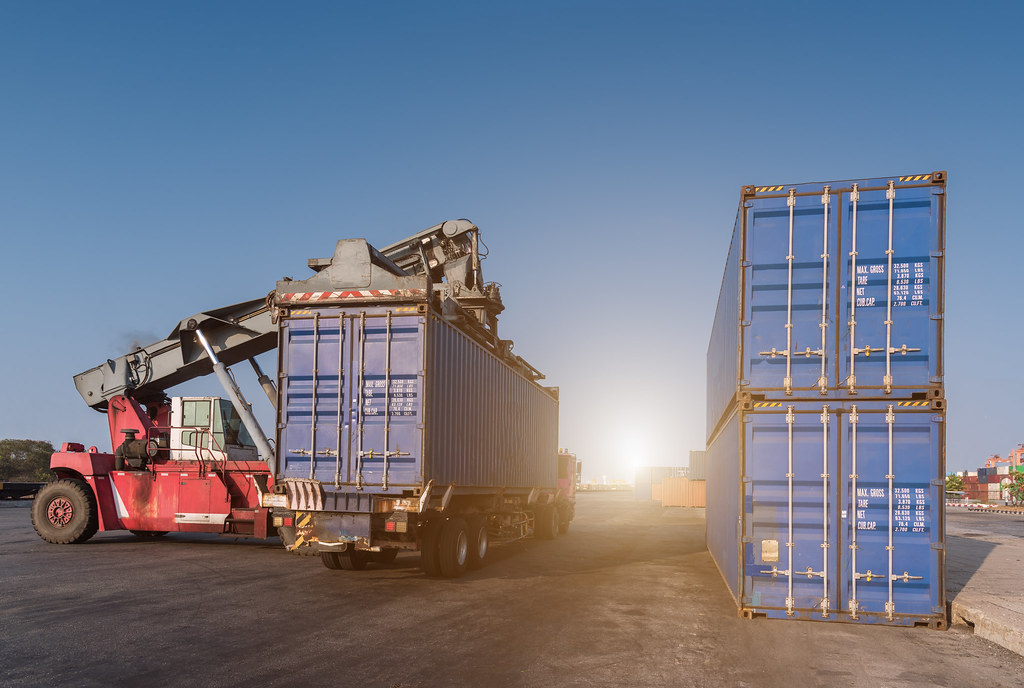
Almost half of all container trucks in Sweden are being driven without a load. Researchers at Chalmers University of Technology in Sweden, have developed calculation models that give a detailed picture of the journeys – and therefore provide guidance for more efficient container transport, with lower costs and reduced emissions.
In 2019, the global transport sector accounted for around 15 per cent of the world’s greenhouse gas emissions, and road traffic was the largest source of emissions in the sector*. An important part of reducing emissions is to make freight transport more efficient. Containers play a central role in world trade, as they can be moved between ships, trains and trucks. However, after unloading, there is not always new cargo nearby, which means that the container must be moved before it can be used again.
Researchers at Chalmers University of Technology have analysed Swedish freight traffic between 2016 and 2019, and conclude that almost half, 44 – 46 per cent, of all truck transports with containers took place without a load. In total, the empty trips accounted for about a third of the total mileage of freight traffic.
“A large part of the container transports do not carry any goods, but still take up road capacity and require fuel, infrastructure and working hours. This means costs and emissions that we want to avoid,” says Violeta Roso, Associate Professor at Chalmers.
Geography is more important than industry
The empty transports were unevenly distributed. About 77 per cent took place within the same region; and the start and end destinations had a greater impact on the probability of an empty trip than which industry they belonged to. In Blekinge, Västra Götaland, Skåne and Kalmar counties, container journeys were less likely to be empty when starting in these regions, but more likely to be empty when ending there. All four counties have major ports where imports exceed exports.
“Empty transports were also significantly shorter than those with cargo. This indicates that trucks are often redirected to limit the distance with empty containers,” says Iván Sánchez-Díaz, Associate Professor at Chalmers.
More accurate measures can reduce empty transports
The researchers’ models take into account the differences between geographical location and the types of industry the container trucks work for, and thus show where measures can have the greatest effect.
“The models show which origins, destinations and sectors have the highest probability of empty container trips. This makes it possible to target efforts more precisely, for example towards port regions, or certain industries,” says Violeta Roso.
According to the study, better coordination and information sharing can reduce the need to move empty containers. The researchers make several suggestions towards the industry, such as that hauliers can work more with the planning of return loads or that shipping companies to a greater extent share information about available containers and where they are needed.
Empty container transports are a global challenge. According to the researchers, the method can be implemented in more countries, to quantify empty container movements and understand the key factors explaining them.
“We hope that the research will help the transport industry to see where there are the greatest opportunities to reduce unnecessary driving, and contribute to authorities or key stakeholders being able to coordinate their transports better. It can be another step towards reducing the transport sector’s climate impact, not only in Sweden but also internationally,” says Violeta Roso.
(Chalmers University of Technology)
* Source: IPCC (2022), Climate Change 2022: Mitigation of Climate Change, Working Group III.